Welcome, aspiring Stalker, to the grim, beautiful, and relentlessly challenging world of Lies of P. You've just stepped off the train in Krat, ready to carve your path through puppet-infested streets and monstrous horrors. Perhaps you're already eyeing some fancy gear or envisioning the ultimate build. But hold your horses (or your mechanical arm, as it were). Before you dump all your precious Ergo into a strategy that will leave you struggling, let's talk about the Top Lies of P Early Game Builds – the common pitfalls that can turn your promising journey into a frustrating slog.
Many players fall into these traps, lured by tempting stats or past soulslike habits. Lies of P, with its unique weapon assembly system, Legion Arms, and Fable Arts, demands a slightly different approach. Getting your early game build right isn't just about survival; it's about setting yourself up for success, minimizing frustration, and truly enjoying the game's exquisite combat.
At a Glance: Dodging Early Game Traps in Lies of P
- Specialization over Balance: Don't spread your stats too thin; focus on Motivity, Technique, or Advance.
- Scaling is King: Raw weapon damage means less than proper stat scaling. Upgrade cranks are essential.
- Don't Neglect Survival Stats: Vitality, Vigor, and Capacity are crucial before you become a damage titan.
- Embrace Elemental Weaknesses: Many early enemies are weak to Electric damage. Exploit it!
- Legion Arms Aren't Just Gimmicks: They're powerful tools that can define your playstyle and counter bosses.
- P-Organ Matters Immediately: Prioritize Pulse Cell upgrades and utility over late-game damage boosts.
- Advance Builds are a Later Game Payoff: While potent, they're hard to force effectively in the very early chapters due to weapon availability.
The Core Delusion: Why a 'Balanced' Build Kills Your Early Game
This is perhaps the biggest lie whispered into the ears of new Lies of P players: "I'll just put a few points into everything to be well-rounded." In almost any other RPG, this might be a sensible approach. In Krat, it's a death sentence.
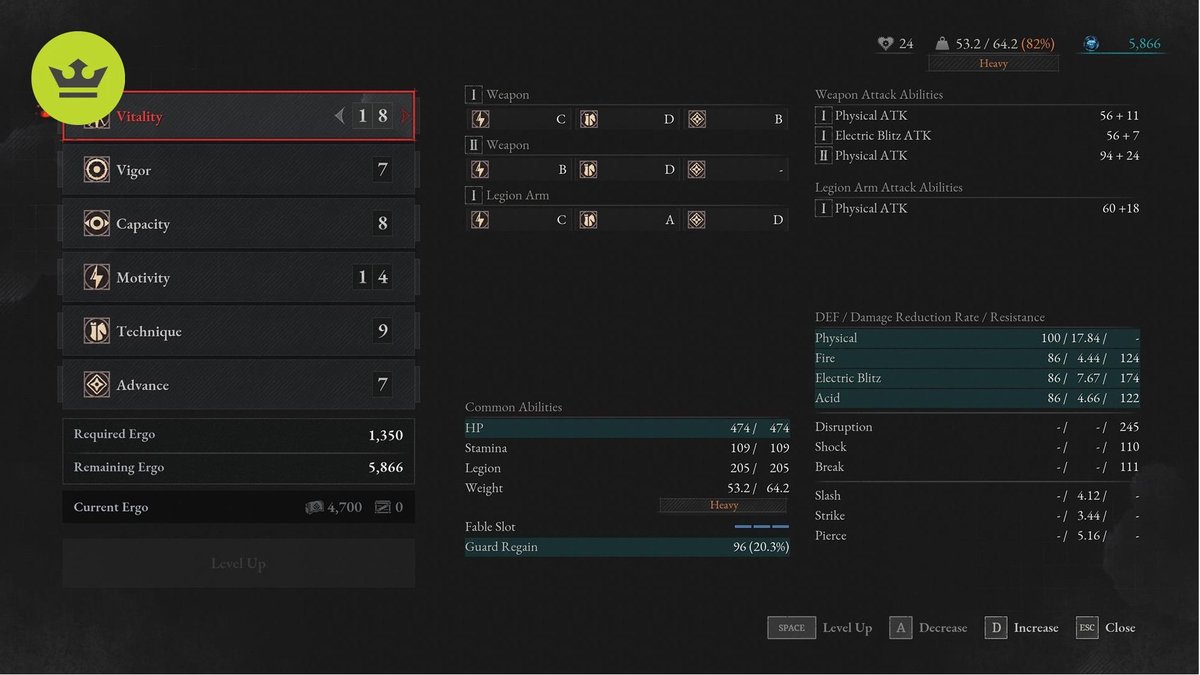
Lies of P rewards specialization. Its weapons scale primarily with one or two of three core damage stats: Motivity (Strength), Technique (Dexterity), and Advance (Elemental/Status). Spreading your points across all three early on means you'll have decent numbers in each, but not enough in any single one to make your weapon truly effective. You'll hit like a wet noodle, struggle to meet weapon requirements, and find yourself constantly underperforming. You need to pick a primary scaling stat and commit to it, at least for the first few chapters. This dedicated approach dramatically impacts your overall item build effectiveness.
Let's break down the specific lies you need to recognize and avoid.
Lie #1: "Any Weapon Will Do If You Upgrade It Enough"
While it's true that even your starting weapon can carry you for a while with proper upgrades, the lie here is that any weapon-stat combination will be equally viable. This particularly applies to ignoring weapon scaling.
You might find a cool-looking blade with high base damage, but if it scales poorly with your chosen primary stat (Motivity, Technique, or Advance), it's simply not going to perform. For instance, if you're building a Technique character but try to force a Motivity-scaling greatsword, you'll be missing out on a huge chunk of potential damage.
The Truth About Scaling and Cranks
Every weapon in Lies of P has a letter grade (D, C, B, A, S) next to Motivity, Technique, and Advance, indicating how well it scales with that stat. A B or A scaling is fantastic; a D is negligible. The magic, however, lies in cranks. Eugenie at Hotel Krat can modify your weapon handles using Motivity, Technique, or Advance Cranks. These cranks change the scaling letter grades, allowing you to tailor a weapon to your build.
Example: The Puppet Saber, a solid starting weapon, comes with C/C scaling in Motivity and Technique. This makes it decent for "Quality" builds (even spread of Motivity/Technique). However, if you commit to Technique, you could use a Technique Crank to improve its Technique scaling to B or A, making it far more potent for your build. Likewise, for a Motivity build, a Motivity Crank would do the trick. Don't just upgrade the weapon level; upgrade its scaling to match your primary stat.
- Pitfall: Thinking the Holy Sword of the Ark (a boss weapon with excellent utility) will be good for your Technique build just because it's a greatsword. While versatile, it scales better with Motivity. You'd be better off using a Technique-focused weapon and saving the boss Ergo for a different purpose or for a later Motivity playthrough.
Lie #2: "Just Stack Damage! Who Needs Health or Stamina?"
This is a classic rookie mistake in many challenging action RPGs. You see that shiny B-scaling on Motivity and dump every point into it, only to find yourself getting one-shot by basic enemies or running out of stamina after two attacks.
In Lies of P, this is an especially potent lie. Ergo, your "currency" and experience points, is precious. Wasting it on a pure damage build early on is counterproductive. You need to survive hits, have enough stamina to dodge and attack, and carry your gear.
Why Vitality, Vigor, and Capacity are Non-Negotiable
- Vitality (Health): More health means more mistakes you can make. Early game bosses are punishing, and a larger health pool gives you valuable breathing room to learn attack patterns.
- Vigor (Stamina): Stamina dictates how many attacks you can string together, how many dodges you can perform, and how long you can sprint. Running out of stamina mid-combo or while dodging a boss attack is almost always fatal. A decent Vigor stat ensures you can actually use your high-damage weapon effectively.
- Capacity (Equip Load & Legion Arm): This stat is often overlooked but critical. It increases your equip load, letting you wear heavier, more protective armor without being too slow (something called "Heavy" encumbrance, which is bad). Crucially, Capacity also increases your Legion Arm energy. Your Legion Arm can be a game-changer, but it's useless if you can't use it. Investing in Capacity early ensures your entire item build is cohesive and functional.
Smart Approach: Aim for a balance. For every 2-3 points in your primary damage stat, put 1 point into Vitality, Vigor, or Capacity, rotating based on your current needs. Are you getting one-shot? More Vitality. Running out of stamina? More Vigor. Can't equip that cool new amulet or heavy defense part? Capacity it is.
Lie #3: "Elemental Damage Isn't Worth It Until Later"
This is a dangerous misconception, particularly in the early chapters of Lies of P. The early game is teeming with puppets – mechanical monstrosities that are often highly susceptible to Electric damage. Ignoring this fundamental weakness means you're fighting with one hand tied behind your back.
The Power of Early Elemental Exploitation
The Electric Coil Stick, available from the Wandering Merchant on Elysion Boulevard, is an absolute powerhouse for the first few chapters. It deals blunt and electricity damage, making it ideal for tearing through puppets. Its Head's Fable Art significantly boosts elemental damage, turning it into a puppet-slaying machine. When combined with a fast handle (like the Puppet Saber Handle), it becomes a high-damage per hit weapon that can absolutely trivialize certain encounters.
- Salamander Dagger: Found in Venigni Works, this weapon deals fire damage and can ignite enemies for damage over time. While not as universally effective against early puppets as electric, it's invaluable against organic enemies and larger monsters (like those in St. Frangelico Cathedral).
Don't Forget Grindstones! Lies of P provides elemental grindstones (Electric, Fire, Acid). Use them! Before a boss or a tough area, activate the appropriate grindstone (especially Electric for puppets) to imbue your weapon with temporary elemental damage. This, combined with a weapon like the Electric Coil Stick, can lead to staggering amounts of damage. Don't wait for a dedicated Advance build to start using elemental damage; it's a tool for everyone.
Lie #4: "My Starting Legion Arm is Good Enough"
Your starting Legion Arm, the Left Arm of Steel, is functional, providing a basic punch. But the idea that it's all you need is a profound lie. Legion Arms are more than just secondary attacks; they are powerful tools that can complement your build, provide utility, and exploit enemy weaknesses.
Embracing Legion Arm Utility
You'll quickly find new Legion Arms like the Flamberge (fire damage, good for organic enemies), Pandemonium (acid, good for corrosion and sustained damage), and the Deus Ex Machina (deployable landmine for area denial and burst damage).
- Motivity Builds: Often benefit from defensive or burst-damage Arms like Aegis (a deployable shield that absorbs damage) or Deus Ex Machina (landmines for heavy hits).
- Technique Builds: Thrive with agile or utility Arms like Puppet String (a hookshot that pulls enemies or you to them, perfect for closing gaps or creating distance) or Falcons Eyes (a ranged gun for quick damage or interrupts).
- Advance Builds: Naturally synergize with elemental arms like Flamberge or Pandemonium, amplifying their chosen element.
Experiment with different Legion Arms. They're not expensive to swap, and finding the right one for a specific boss or area can dramatically alter your combat effectiveness, integrating seamlessly with your broader strategy for item builds.
Lie #5: "Advance Builds Are OP From the Start"
While Advance builds become incredibly powerful later in the game, focusing on them too early is a trap. The "lie" is that you can effectively run an Advance build from the very beginning with the tools available.
The Reality of Early Advance Builds
Good Advance-scaling weapons (like the Acidic Crystal Spear or the Salamander Dagger) and high-quality Advance cranks aren't abundant in the very first chapters. Trying to dump points into Advance without a weapon that properly scales with it will leave you with low damage and a feeling of futility.
Smart Approach: Many players find it more effective to start with a Motivity or Technique build, which have better early weapon options and more straightforward scaling. Once you've progressed further and acquired suitable Advance weapons (like the Acidic Crystal Spear Handle from Path of the Pilgrim, or the Electric Coil Stick for its innate elemental damage which can scale with Advance with the right cranks), then you can use the game's respec option (available after certain boss fights) to transition into a dedicated Advance build. This allows for a smoother progression rather than struggling through the early game.
Lie #6: "Fable Arts Are Just Gimmicks"
A Fable Art is a weapon skill that consumes Fable slots. Many new players see them as flashy but ultimately ignorable. This is a massive lie that deprives you of crucial combat tools. Fable Arts are incredibly powerful, offering everything from massive damage boosts to defensive utility and mobility.
Mastering Your Fable Arts
Each weapon blade and handle comes with its own Fable Art. Learning what they do and when to use them is essential for maximizing your damage and control.
- Puppet Saber's Concentrate: This handle Fable Art boosts your damage for a short time, making it excellent for setting up burst damage on staggered enemies.
- Booster Glaive's Charge: The handle's special skill allows for a rocket-powered, high-damage heavy attack that closes gaps rapidly – far from a gimmick.
- Holy Sword of the Ark's Extension: This Fable Art extends the sword, transforming its moveset for better crowd control. The Blade's Fable Art, Patient Smash, also morphs into a flurry of blows.
Integrate Fable Arts into your combat rhythm. Don't hoard your Fable slots; use them strategically against tougher enemies and bosses. They are often the key to breaking a boss's posture or dealing significant burst damage during openings.
Lie #7: "P-Organ Upgrades Don't Matter Much Early On"
The P-Organ system allows you to unlock various passive upgrades, from increased Pulse Cell potency to additional Fable slots and damage bonuses. The lie is that these are "late game" perks that aren't worth prioritizing early.
Smart P-Organ Prioritization
Your early P-Organ choices have a profound impact on your survivability and efficiency. Prioritize upgrades that directly enhance your ability to stay alive and fight effectively:
- Pulse Cell Upgrades: More Pulse Cells, increased recovery amount, and instant recharge upon reviving are invaluable. These dramatically increase your sustain.
- Fable Slot Upgrades: More Fable slots mean more Fable Art usage.
- Stamina/Guard Regain: Boosting these allows for more aggressive play and better defense.
- Damage/Stagger: While damage is often seen as primary, early P-Organ choices should focus on the foundation first. Once you have solid survival, then lean into damage and stagger boosts.
Making informed P-Organ decisions from the start contributes significantly to a robust well-rounded item build. Don't just pick what sounds cool; pick what helps you survive the immediate challenges.
Crafting Your Truth: Effective Early Game Approaches
Now that we've debunked the lies, let's talk about building a solid foundation. The best early game builds in Lies of P are focused, adaptable, and leverage the tools the game gives you.
1. The Motivity Master (Close-Quarters Tank)
- Core Stats: Prioritize Motivity, then Vigor and Vitality. Capacity for heavier gear and Legion Arm energy.
- Weapons: Start with the Puppet Saber. Once you find a Motivity Crank, use it. The Greatsword of Fate (acquired after Fuoco) is a fantastic Motivity option.
- Legion Arm: Deus Ex Machina (landmine) for burst damage or Aegis (shield) for defense.
- Amulets: Life Amulet (more health) is always a good choice.
- Playstyle: Tank hits, land heavy strikes, stagger enemies, use charge attacks.
2. The Technique Tactician (Agile Parry Fighter)
- Core Stats: Focus on Technique, then Vigor and Capacity. Vitality as needed.
- Weapons: Start with the Wintry Rapier. The Booster Glaive (Venigni Works) is an incredible early Technique weapon, offering high damage and mobility. Later, consider the Tyrant Murderer's Dagger (from Pulcinella) with an Electric Coil Stick Head for shock damage.
- Legion Arm: Puppet String (hookshot) for mobility and enemy manipulation, or Falcons Eyes (gun) for ranged interrupts.
- Amulets: Conquering Amulet (damage buff after perfect guard) rewards precise play.
- Playstyle: Focus on perfect parries, quick attacks, evasion, and exploiting openings. Use Legion Arms for crowd control or gap closing.
The Smart Pivot: When to Respec
Lies of P provides a way to reset your stats and P-Organ upgrades later in the game. This means you aren't locked into your early choices forever. If you started with a Motivity build and later decide you want to experiment with an Advance build, you absolutely can! The key is to:
- Don't struggle unnecessarily. If your current build isn't working, re-evaluate.
- Wait for the right tools. Advance builds in particular often benefit from later-game weapons and cranks.
- Embrace flexibility. Lies of P encourages you to adapt your item builds for different bosses and challenges.
Don't Get Fooled: Common Pitfalls and Misconceptions
- Ignoring Enemy Weaknesses: Pay attention to enemy types. Puppets? Electric damage. Carcasses (organic enemies)? Fire or Acid. This knowledge is your best weapon.
- Hoarding Ergo: While saving Ergo for leveling is good, if you're constantly dying with a huge stash, you're losing more than you gain. Spend it on levels or useful items when you can.
- Ignoring Grindstones: These temporary buffs are incredibly strong, especially the elemental ones. Don't save them "just in case." Use them strategically for boss fights.
- Not Experimenting with Weapon Assembly: The ability to swap weapon heads and handles is Lies of P's unique selling point. Try different combinations! A fast handle with a heavy-hitting blade, or a long handle with a quick dagger. You might find a combination that perfectly suits your style and current challenge.
Your Path to P-Success: Actionable Steps
Navigating the early game of Lies of P doesn't have to be a trial by fire. By understanding and avoiding these common build lies, you'll set yourself up for a much smoother, more enjoyable experience.
- Choose Your Focus: Decide early whether you're leaning Motivity or Technique. Commit your Ergo accordingly.
- Balance Survival with Damage: Don't neglect Vitality, Vigor, and Capacity. They are your lifelines.
- Exploit Weaknesses: Carry an Electric weapon or use Electric Grindstones against puppets.
- Embrace Legion Arms: Find the Legion Arm that complements your playstyle and current challenge. Upgrade it!
- Master Fable Arts: Learn your weapon's Fable Arts and use them. They are powerful.
- Prioritize P-Organ Wisely: Focus on survival and utility first before pure damage.
- Be Open to Change: Don't be afraid to experiment with weapon parts or respec later if a new weapon or strategy calls to you.
Remember, Lies of P is a game about overcoming adversity, and a well-thought-out item build is your most powerful tool. Avoid these early game lies, and you'll be well on your way to becoming a true master of Krat. Good luck, Stalker. You'll need it.